

An outdoor gazebo serves as a functional extension of your living space, providing shelter for gardens, patios, and backyards. However, because these structures are permanently exposed to the elements, their lifespan depends directly on the physical properties of their frame and canopy.
What are the most common materials used for outdoor gazebos?
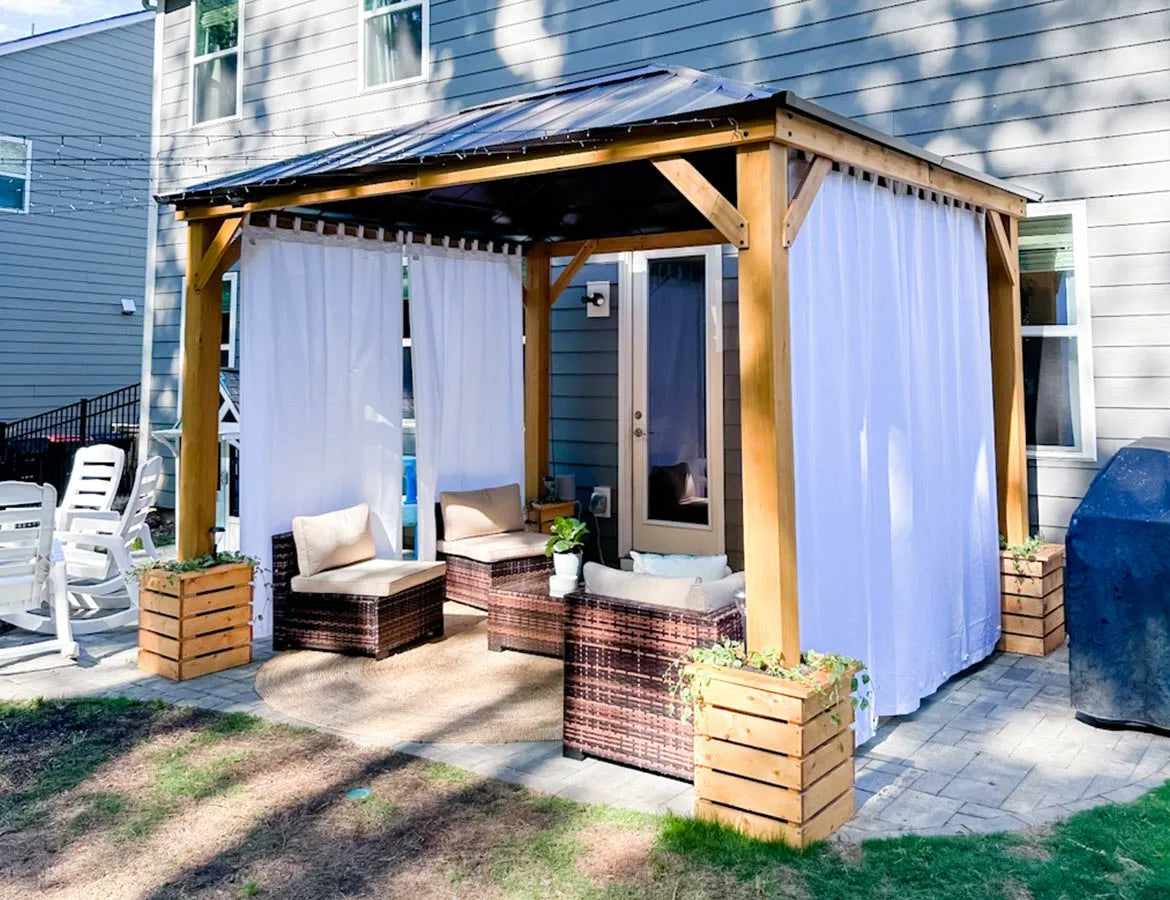
a. Wood
Wood is prized for its warm, organic look.
Pros:
Natural, classic aesthetic that blends seamlessly with gardens and landscapes
Structurally strong and rigid, supporting heavy roofs if designed properly
Can be customized in color, shape, and style
Cons:
Requires regular maintenance, such as chemical sealing, staining, or waterproofing every 12–24 months
Susceptible to rot, warping, and surface cracks (“checking”) when moisture fluctuates rapidly
Best Uses:
Backyard or garden gazebos where a traditional look is desired
Settings where the homeowner is willing to perform regular maintenance
b. Metal (Aluminum & Steel)
Aluminum:
Lightweight and naturally resistant to rust
Forms a protective oxide layer that shields it from deep corrosion, making it ideal for coastal areas
Steel:
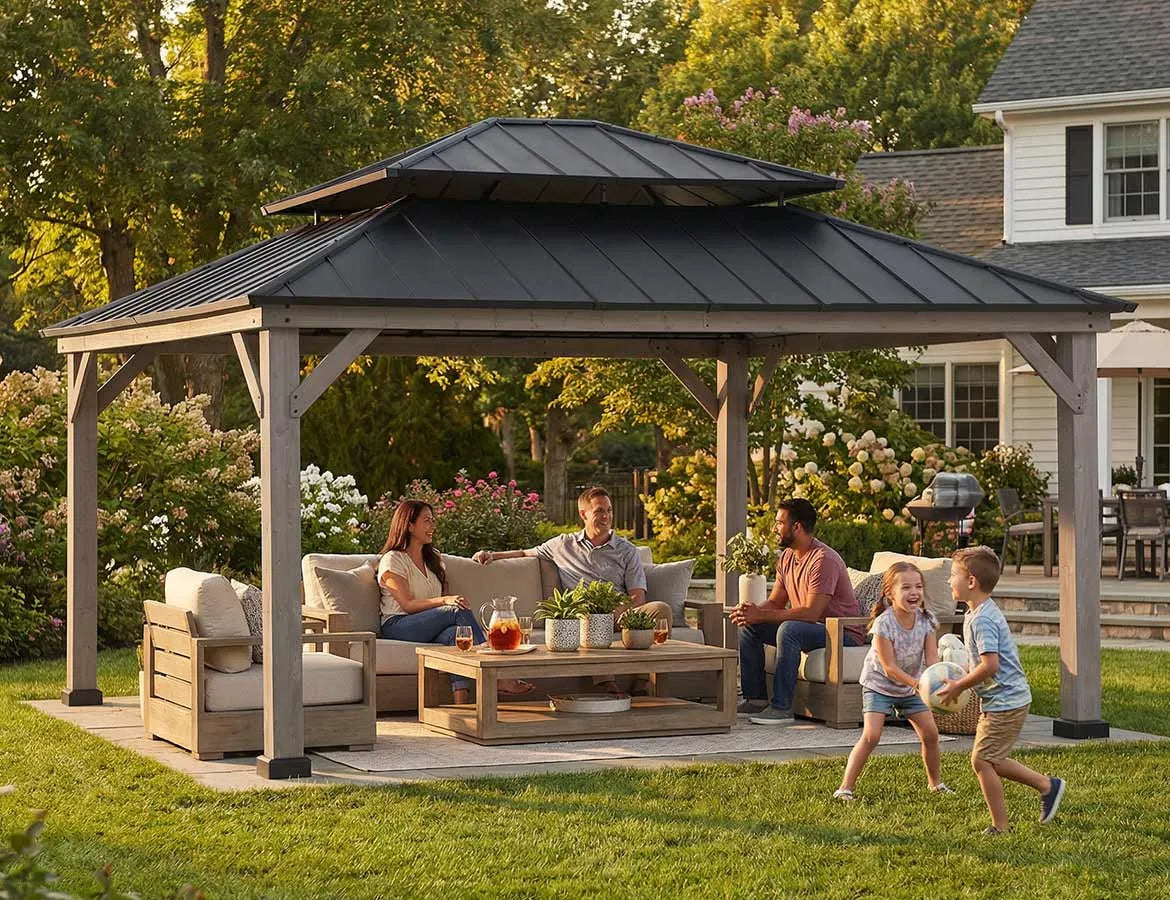
Extremely strong and able to withstand heavy snow, wind, and larger roof spans
Often powder-coated (like Sunjoy steel gazebos) for durable rust protection; the coating is harder and longer-lasting than traditional paint
Pros:
Durable, long-lasting, and low maintenance for treated finishes
Can handle harsh weather conditions better than most wood options
Aluminum makes assembly easier due to lighter weight
Cons:
Aluminum may require extra anchoring because of its lighter weight
Steel is heavier, more difficult to move, and may require professional installation
Note:
Sunjoy’s metal gazebos combine strength, sleek design, and weather resistance, making them ideal for large, permanent outdoor structures.
Best Uses:
Large backyard or commercial gazebos
Areas prone to heavy wind, rain, or snow
c. Resin & Polycarbonate
Polycarbonate is a thermoplastic used in modern gazebo roofing that can be up to 250 times stronger than glass.
Pros:
Lightweight and easy to maintain
Weatherproof and resistant to impact, rust, and moisture
100% UV protection keeps surfaces from sun damage
Cons:
Less traditional or natural appearance compared to wood
Low-quality plastics may fade, become brittle, or warp over time
Best Uses:
Modern patios or terraces
Urban or small spaces where lightweight, durable material is preferred
d. Fabric & Canopy Materials
Materials:
High-density fabrics like polyester or Sunbrella
Must have UV-resistant coatings and waterproofing for durability
Pros:
Protects from sun and rain while allowing airflow
Lightweight, flexible, and easy to replace if needed
High-quality fabrics (solution-dyed) maintain color and strength over multiple seasons
Cons:
Standard polyester without UV coating can weaken and fade in one season
Lower-quality fabrics can tear, bleed color, or lose tensile strength quickly
Details:
Durable fabrics are measured by Denier, which reflects fiber thickness. Higher Denier fabrics resist tearing, while UV coatings prevent sun damage.
Sunjoy canopies feature high-density, UV-resistant fabrics to prevent color bleeding and extend lifespan, ensuring long-term performance in outdoor conditions.
Best Uses:
Covering patios, decks, or temporary garden structures
Areas needing sun and water protection with lightweight, removable coverage
What specific factors directly affect gazebo durability?
Climate exposure, the frequency of maintenance, and the quality of the initial assembly are the three primary variables that determine if a gazebo lasts five years or twenty.
Climate Exposure:
Areas with high humidity accelerate metal oxidation and wood rot, while high-altitude regions with intense UV rays cause fabrics to become brittle. Identifying your local "primary stressor" (wind vs. sun vs. rain) is the first step in selecting a material.
Maintenance and Assembly:
Cleaning: Removing debris prevents mold growth on fabrics and wood.
Sealing: Applying protective coatings to wood and checking powder-coating for scratches.
Hardware: Using reinforced joints and ensuring all bolts are tightened prevents "frame racking," which weakens the structure over time.
Warranty and Confidence:
A manufacturer’s warranty period is often a direct indicator of material quality. Long-term warranties suggest that the engineering team has tested the materials against standardized stress tests for wind and weight loads.
Why should you choose Sunjoy for your outdoor gazebo?
Sunjoy is a recognized brand that balances aesthetic design with the engineering requirements of long-term outdoor exposure. We offer a diverse range of gazebos that utilize heavy-duty metals and tiered roof designs for better airflow.
The use of powder-coated steel and high-denier fabrics addresses the primary causes of gazebo failure: rust and fabric tearing. By focusing on "all-weather" construction, we provide solutions that work in various geographical climates.
Popular models, such as their hardtop and soft-top variants, are designed for different settings. Whether you need a permanent structure for a large backyard or a lightweight version for a patio, their attention to reinforced joints and weather-resistant finishes ensures reliability.
Conclusion: How do you choose the right material for your needs?
The most durable choice for most users is a powder-coated steel or aluminum frame paired with a polycarbonate roof or a high-denier, UV-resistant fabric canopy.
To make your final decision, weigh the following:
- Wood: Best for natural looks; high maintenance.
- Metal: Best for maximum lifespan and low maintenance.
- Resin/Fabric: Best for modern styles and cost-efficiency.
Ultimately, Sunjoy offers a range of durable, reliable gazebos that balance these material benefits with long-term performance, making them a safe investment for any outdoor living space.
Leave a comment
All comments are moderated before being published.
This site is protected by hCaptcha and the hCaptcha Privacy Policy and Terms of Service apply.